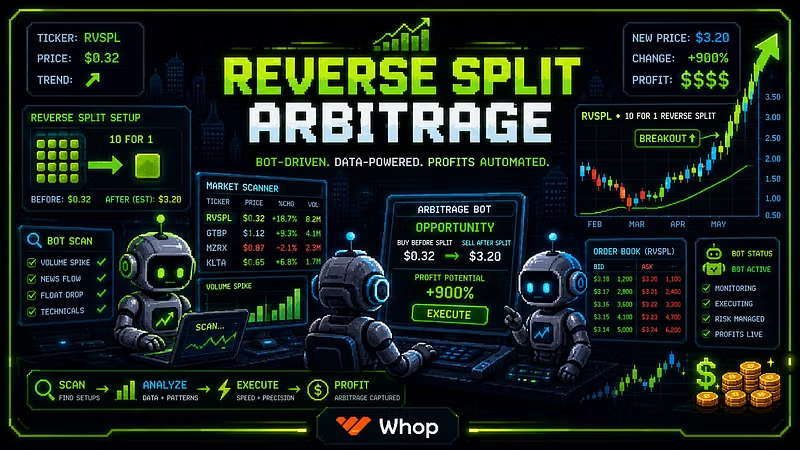


How Reverse Split Arbitrage Actually Works (And Why Most Traders Miss It)
Most traders see a reverse stock split announcement and scroll right past it. That's usually where the opportunity is.
Reverse split arbitrage is one of the most consistent strategies in the market — and almost nobody talks about it. Here's the quick breakdown:
What happens during a reverse split:
When a company does a reverse split (say 1-for-10), shareholders with fewer than 10 shares don't just get wiped out. In many cases, that small position gets rounded up into a full post-split share.
Where the arbitrage lives:
The edge is in the round-up treatment. If you size your pre-split position correctly, the value of the rounded-up post-split share can exceed the original cost of your shares. It's not price prediction, momentum, or hoping the stock runs — it's a structural setup based on how the broker and company handle the split.
Why automation matters:
The hard part is execution. You need to track every upcoming reverse split, confirm the round-up mechanics, calculate the right share count, enter before the deadline, and manage positions across multiple brokers. Doing this manually across dozens of tickers? Not realistic.
That's exactly why I built Idle Markets — a Discord-based reverse split arbitrage system that runs on autopilot from your phone:
• RSA Alerts — real-time notifications the moment a round-up opportunity appears ($9.99/mo)
• Autopilot Bot — fully automated execution that handles share count calculation, entry timing, and multi-broker management ($49.99/mo)
We've been running this for our community and the results speak for themselves. 20+ traders are already in.
Most traders ignore the strategy. That's the opportunity.
Drop a comment if you have questions. Happy to break down specific setups.
