Dialed In

Your guide to the watch game. What to buy, what to skip, and how to build a collection that actually holds value. Rolex, AP, Patek, and ever...
Location hidden
Created byProfile pictureowen
2 joined
Profile picture
owenProfile picture@ohwhen·Jun 21

One company makes the $250 MoonSwatch and a $300,000 Breguet. That is not a contradiction.

BIEL/BIENNE — Swatch Group's leadership has been unusually candid in recent press appearances about the state of Swiss watchmaking — and about the deliberate architecture behind a conglomerate that spans every price point in the market. Understanding that architecture is one of the most useful things a first-time buyer can do before spending serious money on a watch.


The group owns Swatch, Tissot, Hamilton, Longines, Omega, Breguet, Blancpain, and several others. The price range across that portfolio runs from roughly $50 to over $300,000. From the outside, that looks incoherent. From the inside, it is one of the most deliberate business strategies in consumer goods.


How Nicolas Hayek Sr. built the ladder


In 1981, the Swiss watch industry was collapsing. Japanese quartz manufacturers — Seiko, Citizen, Casio — had spent a decade producing accurate, affordable watches that made Swiss mechanical production look expensive and obsolete. Two of Switzerland's largest watch groups, ASUAG and SSIH, were near bankruptcy.


Nicolas Hayek Sr., a Lebanese-born Swiss consultant, was hired to assess the damage. His report recommended something the industry considered radical: merge the groups, create an affordable quartz product that could compete directly with Japan on price, and use the profits to fund the continued production of high-end mechanical watches.


The affordable product became Swatch — plastic case, quartz movement, fashion-forward colors, sub-$50 retail. It worked. Swatch became a cultural phenomenon. The Swiss watch industry survived.


The key insight Hayek had was that the market was not one thing. It was a ladder — and the same company could own every rung of it. A teenager buys a Swatch. A college graduate buys a Tissot. A professional buys an Omega. A CEO buys a Breguet. Each brand serves a different moment in the same buyer's life, and the conglomerate captures revenue at every step.


What the ladder looks like today


The structure is roughly:


  • Swatch / Flik Flak: $50–$300. Fashion, color, quartz. Entry point to the brand universe.

  • Tissot / Hamilton / Certina / Mido: $300–$2,000. Swiss automatic movements, genuine craftsmanship, no brand tax.

  • Rado / Longines: $1,000–$5,000. Heritage positioning, higher finishing, bridging the gap to luxury.

  • Omega: $4,000–$50,000+. The group's prestige workhorse. Moonwatch, Seamaster, Constellation.

  • Glashütte Original / Jaquet Droz: $4,000–$200,000. German precision and artistic dials.

  • Breguet / Blancpain: $10,000–$300,000+. The apex. Independent-feeling brands with century-long traditions.


Omega is where the group concentrates most of its marketing investment. It is the brand that Swatch Group wants aspirational buyers to land on — visible enough to signal success, premium enough to justify the price, and accessible enough that a strong year of saving makes it achievable for a working professional.


The MoonSwatch was not desperation — it was strategy


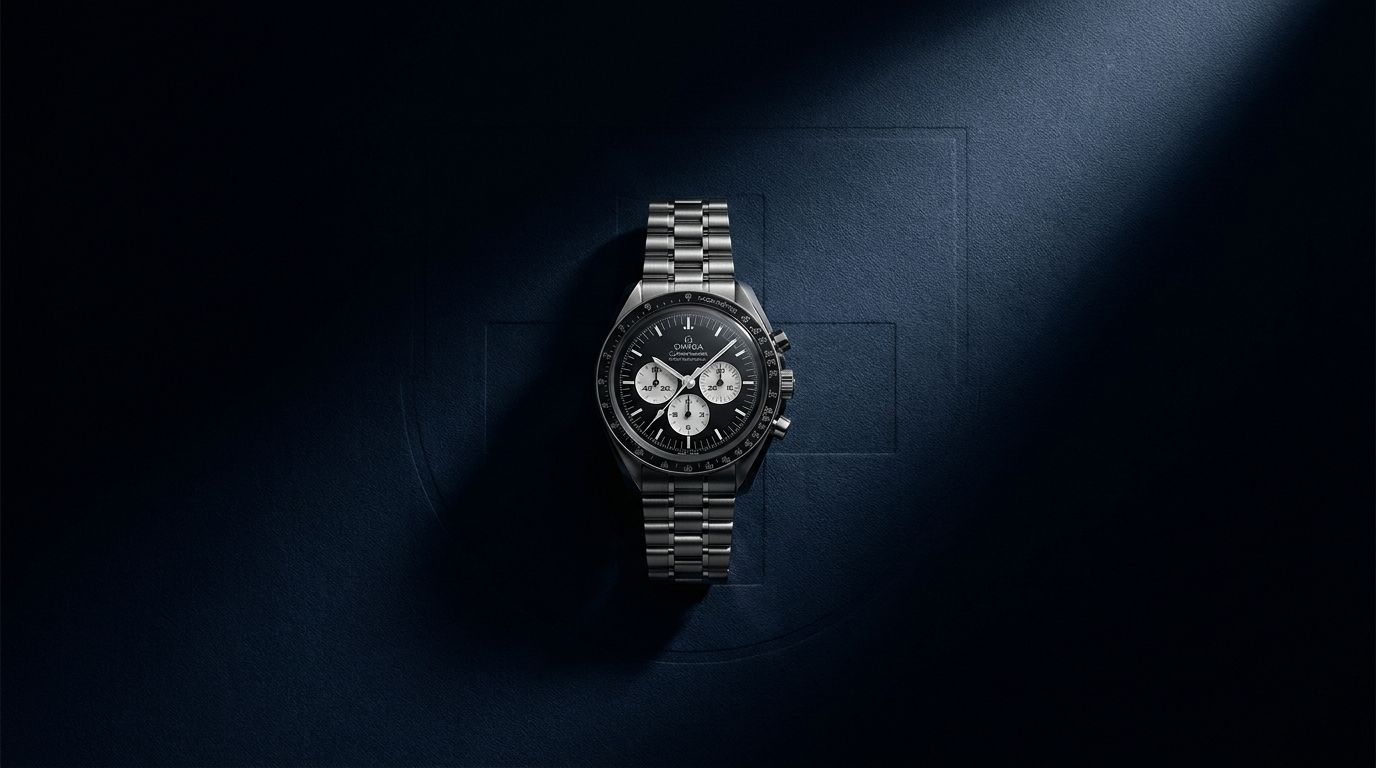
When Swatch and Omega launched the MoonSwatch in April 2022, critics called it brand dilution. A $250 bioceramic watch inspired by the $6,900 Speedmaster Moonwatch, sold only in Swatch boutiques, with lines around the block and resellers marking them up to $1,000 immediately.


The goal was not to sell watches. The goal was to drive traffic into Swatch boutiques from a demographic that had never been inside one. Young buyers who lined up for a MoonSwatch were, for the first time, standing in a store that also sold Longines and Omega. Some of them bought something more expensive. Many of them got on a mental track toward eventually doing so.


It worked. Omega's sales did not suffer. Swatch's foot traffic surged. The group acquired new customers at every price point.


What this means for your first watch purchase


If you are saving for your first luxury watch, the Swatch Group ladder is a roadmap, not a ceiling.


A Tissot PRX Powermatic 80 at approximately $625 gives you a genuine Swiss automatic with an integrated bracelet and 80 hours of power reserve. It is not a compromise watch. It is the right watch for a 22-year-old who is not ready to spend $10,000 and does not want to pretend otherwise.


A Hamilton Khaki Field Mechanical at approximately $495 gives you a legible, durable, tool watch with a 80-hour manual-wind movement made in a facility that also produces Omega calibres. The story behind the case is legitimate.


These are not "starter watches." They are the rung you are on right now. You move up the ladder when you are ready — and when you do, you will have bought nothing you need to regret.


The conglomerate designed it that way.


Image: Swatch Group / Omega SA
file_WQZIJef9yXTE5
Profile picture
owenProfile picture@ohwhen·Jun 21

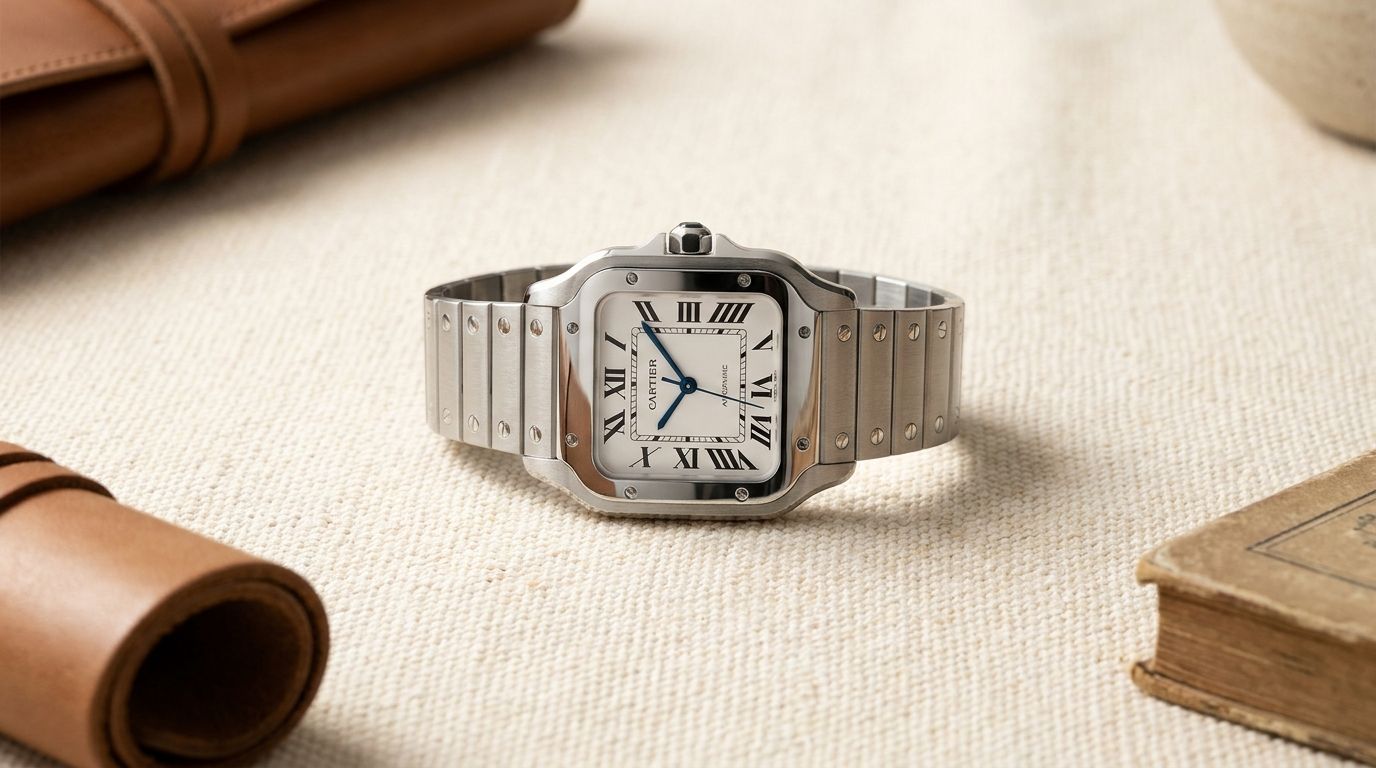
More first-time buyers are choosing a Santos over a Submariner — here is why

NEW YORK — There is a shift happening in how younger watch buyers are spending their first serious money. The default answer used to be simple: Rolex Submariner, full stop. Today, a growing number of buyers in their mid-twenties are walking into an authorized dealer and coming out with a Cartier Santos instead. That is not a trend. It is a statement about what a first luxury watch is supposed to mean in 2026.


A watch that invented its own category


Before the Santos existed, men wore pocket watches. Wristwatches were considered a women's accessory — too delicate, too fussy for serious use. That changed in 1904, when Brazilian aviation pioneer Alberto Santos-Dumont asked his friend Louis Cartier to design a watch he could read while piloting his airship over Paris. His hands were on the controls. A pocket watch was useless.


What Cartier produced was a square-cased watch with an exposed screw bezel, a flat crown, and a simple leather strap. It sat on the wrist. It read instantly. Santos-Dumont wore it publicly for years — including during his widely-witnessed flight at Bagatelle field in 1906, the first public powered flight demonstration in Europe.


The Santos was not marketed as a wristwatch. It was built as a tool for a specific person doing a specific thing. That is how the category started.


What the 2018 relaunch actually changed


Cartier relaunched the Santos de Cartier in 2018 with two practical innovations that make it genuinely better to own than most comparable watches at the price.


The QuickSwitch system lets you swap the bracelet for a strap — or strap for bracelet — in seconds, with no tools. Push a button, slide the component, done. No watchmaker visit, no scratching the lugs. For a watch you will actually wear every day, that matters more than most people realize until they own a watch with conventional strap attachments.


The SmartLink system allows bracelet sizing without tools as well. Individual links can be added or removed by hand. You buy the watch, you size it yourself, you are done.


Neither innovation is flashy. Together they make the Santos the most practically thoughtful bracelet watch in its price range.


The case for Santos over Submariner at $8,000


The steel Santos de Cartier medium currently retails at approximately $7,900 to $8,200 depending on configuration. The Rolex Submariner Date (ref. 126610LN) lists at $10,300. Both are available at authorized dealers, though Rolex sports model availability remains constrained in most markets.


The arguments for the Santos at that price:


  • Actual availability: Cartier ADs typically have Santos in stock. No relationship-building required, no waitlist, no gray market premium. You walk in, you buy it.

  • Design distinction: The Santos looks like nothing else in its category. The exposed screws, the square case with rounded corners, the Roman numeral dial — it reads as design literacy rather than default luxury signaling. In rooms full of round watches, it stands out.

  • Heritage depth: Most watches claim heritage. The Santos has a specific story — one man, one problem, one solution — that has been factually documented for over 120 years. That is unusual.

  • Cartier brand equity: Cartier is not a watch brand that also makes jewelry. It is a maison with 170 years of history that happens to make some of the most recognized watches on the planet. The Santos carries that weight.


The argument for the Submariner is also real: it is the most recognized sports watch in the world, its secondary market is the most liquid of any reference, and its design language — diver's bezel, lume plots, screw-down crown — is functional rather than decorative. If resale optionality matters to you more than anything else, the Sub wins.


Where the secondary market stands


The Santos has not experienced the same secondary market volatility as Rolex sports models. It has not spiked to 150% of retail, and it has not crashed. Steel medium examples trade on Chrono24 at or slightly above retail — roughly $8,000 to $9,500 — depending on condition and whether the full box and papers are present.


That stability is actually a good sign for a first purchase. You are not buying into inflated premium. You are paying a fair price for a watch that holds value because people genuinely want to wear it, not because flippers bid it up.


The first-watch question you should actually be asking


The default framing — Submariner vs. Santos vs. Royal Oak — treats the decision as a spec comparison. It is not. It is a question about what you want the watch to say about you, and what you want to say about the watch.


The Submariner says: I understand the canon. The Royal Oak says: I know what came after. The Santos says: I know where it all started.


None of those is wrong. But if you are 23 years old and you want something that will still feel right when you are 40, the one with 120 years of documented history behind it is not the worst place to start.


Image: Cartier

file_PmsRGbX26Wtkd
Profile picture
Artur Bień@arturbien·Jun 24

i want both thooo

Profile picture
owenProfile picture@ohwhen·Jun 20

The science behind why Rolex makes such a big deal about two seconds a day

GENEVA — Rolex tests every watch it makes. Not a statistical sample. Not a random selection from each batch. Every single one, after it has been fully assembled and cased. If you buy a new Submariner, that specific watch — your watch — has been measured for accuracy in five positions and at two temperatures before it ever left Plan-les-Ouates.


That is unusual. And it explains a lot about why the brand commands the prices it does.


What the Superlative Chronometer standard actually means


COSC — the Contrôle Officiel Suisse des Chronomètres — is the independent Swiss body that certifies movements as chronometers. Their threshold for mechanical movements: -4 to +6 seconds per day, tested over 16 days across multiple positions and temperatures. About half of all Swiss movements submitted fail. The certification matters.


Rolex goes further. Their Superlative Chronometer standard requires ±2 seconds per day, tested in-house after the movement is cased — because casing a movement changes how it behaves. The crystal adds pressure. The rotor interacts differently. The gaskets create their own microenvironment. A movement that passes COSC at the calibre stage may drift outside tolerance once it is inside a Submariner case. Rolex accounts for that.


Two seconds per day sounds modest. It is not.


What two seconds actually requires


A mechanical watch keeps time via a balance wheel oscillating — in Rolex's current movements — at 28,800 vibrations per hour, or 8 beats per second. Each beat is a tiny mechanical event: the escapement releases a tooth of the escape wheel, the balance receives an impulse, the spring returns it. Eight times per second, every second of every day.


The accuracy of that system is affected by:


  • Temperature: the hairspring expands and contracts with heat and cold, changing its effective stiffness and altering the beat rate

  • Magnetism: steel components in the movement can become magnetized, causing the hairspring coils to attract each other and run fast

  • Gravity: the movement runs at different rates in different positions — crown up, crown down, dial up, dial down, each produces measurable variation

  • Mainspring tension: a fully wound movement runs at a slightly different rate than one at 50% power reserve


Rolex addresses each of these directly. The Parachrom hairspring is made from a paramagnetic niobium-zirconium alloy that is essentially unaffected by magnetic fields and 10 times more resistant to shocks than conventional hairsprings. The Chronergy escapement — introduced in 2015 — improves energy efficiency by 15%, meaning less variation as the mainspring unwinds. The Paraflex shock absorber protects the balance staff pivot from impact without adding friction.


All of that to shave four seconds of daily error down to two.


Where atomic clocks fit in


The reference standards used by precision timekeeping labs — including those that supply COSC's testing infrastructure — are rubidium atomic clocks. A commercial rubidium oscillator loses roughly one second every 300 years. Research-grade optical lattice clocks developed at institutions like NIST in Boulder and PTB in Germany are accurate to approximately one second per 300 million years. These clocks are so precise they can detect gravitational time dilation caused by lifting them three centimeters off a table — Einstein's general relativity, measurable on a lab bench.


Against those standards, a Rolex at ±2 seconds per day looks crude. A cheap quartz watch at ±15 seconds per month looks crude. All mechanical timekeeping looks crude.


That is entirely beside the point.


Why none of this matters — and why it matters completely


Nobody buys a Submariner because it keeps better time than their phone. Your phone is synchronized to an atomic time server accurate to within milliseconds. The watch on your wrist will never come close.


What the Superlative Chronometer certification actually measures is manufacturing consistency. A movement that holds ±2 seconds per day across five positions and two temperature ranges has extremely tight tolerances on every component — the hairspring is within spec, the balance staff is concentric, the gear train has correct depthing throughout, the escapement geometry is precise. The timekeeping standard is a proxy for overall quality control.


When Rolex says every watch passes this test, they are making a claim about their manufacturing process: that it is consistent enough to guarantee a specific outcome across every unit produced. That is what $15,000 buys you. Not time accuracy. Manufacturing certainty.


The atomic clock is the reference. The Rolex is the artifact. They are not competing with each other. One tells you what perfection looks like. The other tells you how close a human-made mechanical object can reasonably get.


Image: Rolex SA

file_QJYvikx8KDwjp
Profile picture
owenProfile picture@ohwhen·Jun 20

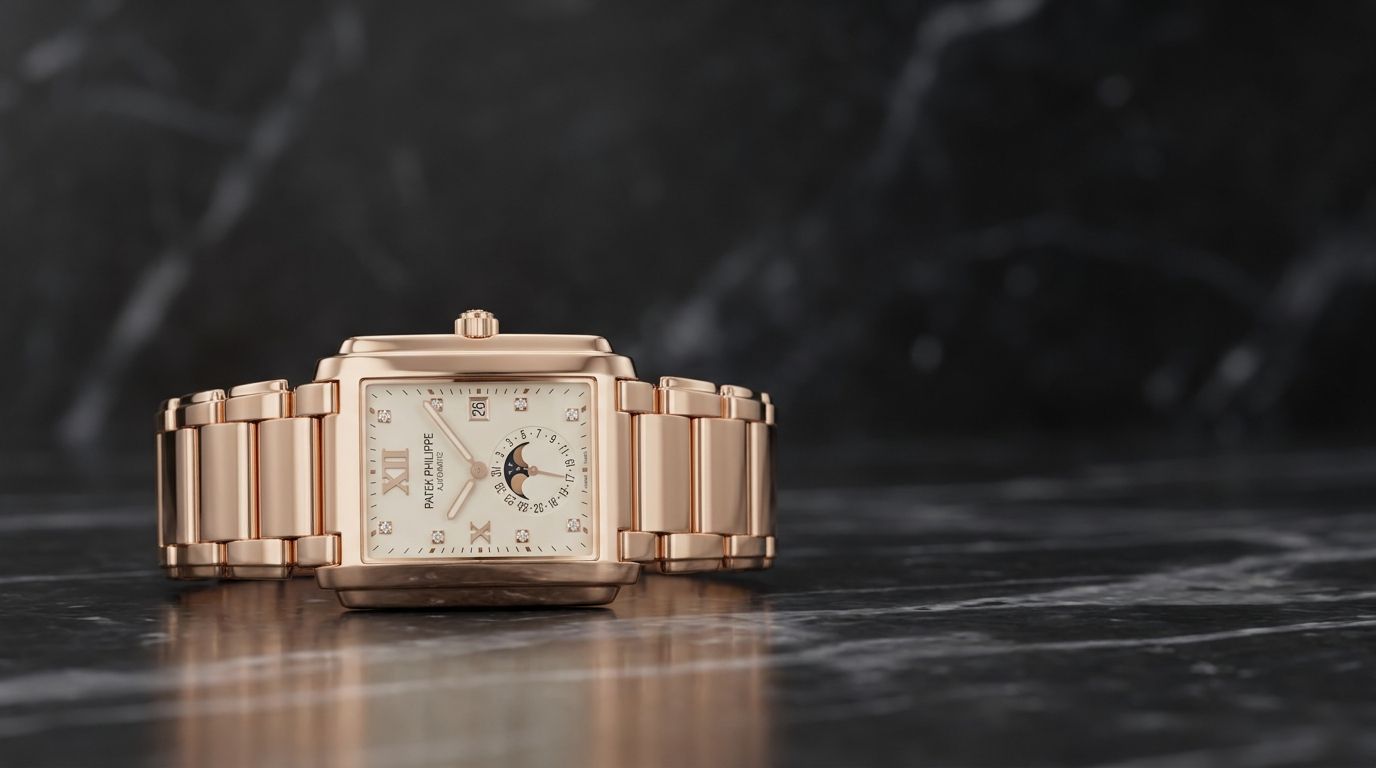
Patek put a perpetual calendar in its smallest case — here is why that matters

GENEVA — Patek Philippe has been making perpetual calendars since the 1890s. For most of that time, the complication lived almost exclusively in large, expensive pieces built around a specific kind of buyer. The Twenty~4 Perpetual Calendar changes that premise entirely.


It is not the most expensive thing Patek makes. It is not even close. But it may be the most technically instructive watch the brand has released in recent memory — and if you are saving for your first serious piece, understanding what Patek did here tells you more about the brand than any spec sheet.


What the Twenty~4 line actually is


The Twenty~4 debuted in 1999 as ref. 4910 — Patek's first watch designed explicitly for an active, modern lifestyle. The original ran a quartz movement. For a brand that had spent a century defining mechanical horology, putting a battery inside a Patek was a genuine statement: they were willing to serve a different kind of wearer, even if it made traditionalists uncomfortable.


The 2018 introduction of the Twenty~4 Automatic (ref. 7300/1200A) shifted the conversation. Now the line had a self-winding movement — Calibre 324 S C, the same base used across Patek's core collection — in a 38mm case with an integrated bracelet. Suddenly, the Twenty~4 was a serious horological object, not just a fashion statement.


The perpetual calendar is the next step.


What a perpetual calendar actually does


The perpetual calendar is one of horology's oldest and most respected complications. It automatically accounts for months of different lengths — 28, 29, 30, 31 days — without manual correction. It recognizes leap years. The mechanism requires adjustment only at irregular century years where the standard four-year cycle breaks down. The next one is 2100.


In practice, this means a perpetual calendar watch manages itself across an entire lifetime. You set it once. It handles February 28th and March 1st on its own. Your grandchildren can wear it and it will still be accurate — assuming someone winds it.


Patek has been perfecting this mechanism for over 130 years. Their Calibre 240Q — the movement behind the perpetual calendar ref. 5140 and related pieces — measures 3.28mm thick and is widely considered the best perpetual calendar movement in current production. Engineering a derivative of it into a case as compact as the Twenty~4 required work that most manufactures simply cannot do.


Why miniaturization is genuinely hard


The standard objection to women's complications is that brands shrink an existing movement and charge the same price. That misses what miniaturization actually involves.


Every component in a perpetual calendar has a minimum viable size. Gears need sufficient tooth depth. Springs need mass to deliver consistent force. The cam system driving the leap year indication must be precisely weighted. Reducing a movement's diameter by even a few millimeters means redesigning dozens of individual parts from scratch — not scaling them proportionally, but re-engineering them to function at the new size.


Patek's investment in the Twenty~4 Perpetual Calendar is the same investment they make in any new complication reference. The case is smaller. The development cost is not.


What it costs and who buys it


The Twenty~4 Perpetual Calendar starts around CHF 130,000 to 150,000 depending on configuration — rose gold, white gold, or platinum, with diamond-set options that push the price higher. That positions it alongside entry-level grand complications from competing houses, not against other dress watches.


The buyer is not necessarily a traditional collector. It is more likely someone who wants a daily wear piece that contains one of the most sophisticated calendar mechanisms ever miniaturized, made by the brand with the longest institutional commitment to perpetual calendars in the industry.


Secondary market context matters here. Perpetual calendar references from Patek consistently trade at or above retail. The ref. 5140P has sold at auction for two to three times its list price. The Twenty~4 Perpetual Calendar is a newer reference — but the complication's auction track record is one of the strongest in horology, and Patek's platform effect is real.


What first-time buyers should take from this


You are probably not buying a Twenty~4 Perpetual Calendar as your first watch. But you should understand why it exists.


Patek's strategy has always been to build pieces that outlast their original owners. Every complication they introduce — annual calendar, perpetual calendar, minute repeater — is an argument that the brand makes things worth passing down. The Twenty~4 Perpetual Calendar extends that argument to a new generation of buyers who did not previously see themselves in a Patek catalogue.


That is not a marketing move. It is a statement about what the brand thinks watchmaking is for. And the brands that ask that question seriously are the ones worth saving for.


Image: Patek Philippe

file_GhhtvgJWvcqMb
Profile picture
owenProfile picture@ohwhen·Jun 19

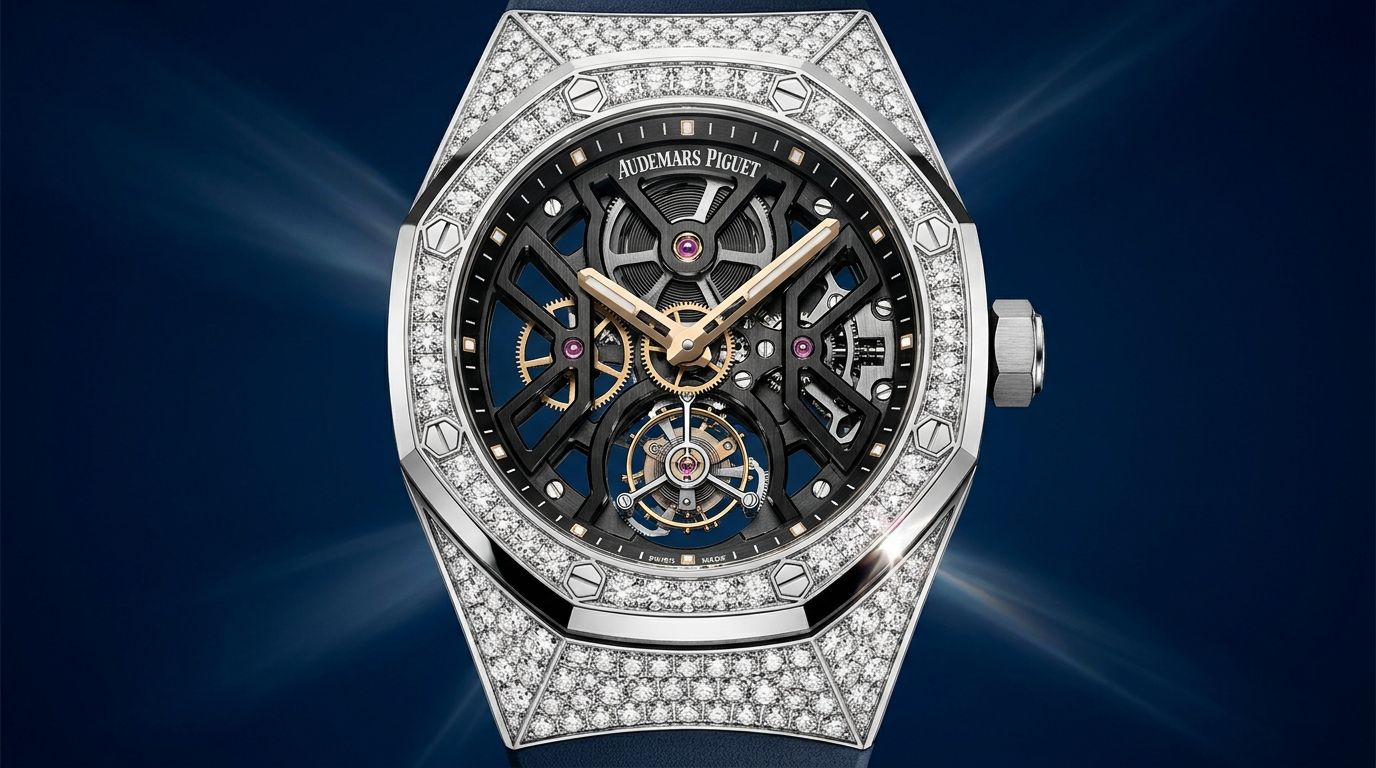
AP's gem-set tourbillon is the most extreme thing in watchmaking right now

NEW YORK — There is a watch in Audemars Piguet's current lineup that sets diamonds on a skeletonized movement and asks you to pay somewhere between $500,000 and $1 million for the privilege. It is not a one-off. It is not a concept. It is a production reference. And it might be the most technically unhinged thing a mainstream manufacture produces.


The watch is the Royal Oak Concept Flying Tourbillon with gem-setting, and it sits at the intersection of two disciplines that were never supposed to coexist: haute horlogerie and haute joaillerie.


What the Concept line actually is


The Royal Oak Concept debuted in 2002 as AP's R&D showcase — a line where the brand's movement engineers could experiment without the commercial pressure of the core Royal Oak collection. Early references explored tourbillons, chronographs, and skeletonization. The case architecture borrowed the Royal Oak's octagonal bezel but pushed dimensions to 44mm and beyond, giving movement designers room to breathe.


Over two decades, the Concept became AP's most technically ambitious series. References have housed split-seconds, perpetual calendars, and flying tourbillons — sometimes simultaneously. The movement is always the point. The dial is secondary, because in most references, there is no dial. Just bridges, gears, and empty space.


Why gem-setting a skeleton movement is nearly impossible


To understand what AP pulled off, you need to understand gem-setting basics. Setting a diamond requires a setter to use a graver — essentially a small chisel — to raise metal around the stone and lock it in place. The process requires a stable, rigid surface. Flat metal. A bezel. A case side.


A skeletonized movement has none of that. The bridges are narrow, sometimes less than a millimeter wide. The spaces between components are open. Apply setting pressure in the wrong spot and you deflect a bridge, disrupt a gear train, or crack a component that took hundreds of hours to produce. Every stone must be set after the movement is fully assembled and regulated, which means the setter is working around live, finished mechanics.


AP's approach on the Concept Flying Tourbillon gem-set references uses pavé diamonds across the bezel, case flanks, lugs, and — critically — the movement bridges themselves. The crown and pusher are set. In some configurations, the tourbillon cage receives stones. The total diamond count in certain references exceeds 500 individual gems, each set by hand, on a watch that retails above $500,000.


The flying tourbillon underneath


Strip the diamonds and the movement is already exceptional. The flying tourbillon — a tourbillon without an upper bridge, appearing to float — reduces visual obstruction and eliminates approximately 0.1 grams of component weight, which meaningfully affects precision at this scale. The cage rotates once per minute. The escapement is visible from both sides.


AP manufactures its tourbillon cages in-house. The cage itself weighs roughly 0.29 grams, a figure the brand references often because it demonstrates just how close to nothing the mechanism is. That near-weightlessness is what enables the visual drama of a flying configuration — a conventional upper bridge would anchor it visually and mechanically.


Power reserve typically runs 65 to 72 hours depending on configuration. The movement beats at 21,600 vph — a deliberate choice, as higher frequencies increase wear on a tourbillon's delicate components.


What this costs and who buys it


Entry-level Concept Flying Tourbillon references without gem-setting start around $280,000 to $320,000. Add full pavé on the case and bridges and you are at $500,000 to $700,000. Heavily set special editions — those with baguette-cut stones or specific high-carat center pieces — have cleared $1 million at authorized dealers and at auction.


The buyer profile is not a watch collector in the traditional sense. It is someone who already owns a serious watch collection and wants a piece that reads as fine jewelry to a room that does not follow horology. The Royal Oak silhouette is recognizable enough to signal AP. The diamonds signal wealth. The tourbillon is the detail that impresses the one person in the room who actually knows what they're looking at.


Secondary market performance has been strong. The Concept line in general holds better than most of AP's non-Royal Oak references because production is deliberately limited — AP does not publish annual numbers but industry estimates suggest fewer than 50 to 100 units per year across all Concept references.


What it signals about where AP is going


AP has spent the last decade expanding what the Royal Oak is. The Offshore brought size. The Selfwinding brought accessibility. The Concept brought technical ambition. The gem-set Concept is the logical endpoint of that progression: take the most complicated movement the brand produces, and make it the most visually confrontational piece in the market.


It is not for everyone. Most collectors who take watchmaking seriously are uncomfortable with it — the stones feel like they obscure rather than celebrate the movement. That discomfort is probably intentional. AP has always understood that the Royal Oak's power comes partly from its divisiveness.


In 1972, the original Royal Oak was too industrial. Too large. Too expensive for a sports watch. Fifty years later, it is the most recognized watch on the planet. The gem-set Concept will not achieve that status. But it does not need to. It needs to be extreme enough to define a category — and it does.


Image: Audemars Piguet

file_ARcFgNlAG6mQF
Profile picture
owenProfile picture@ohwhen·Jun 19

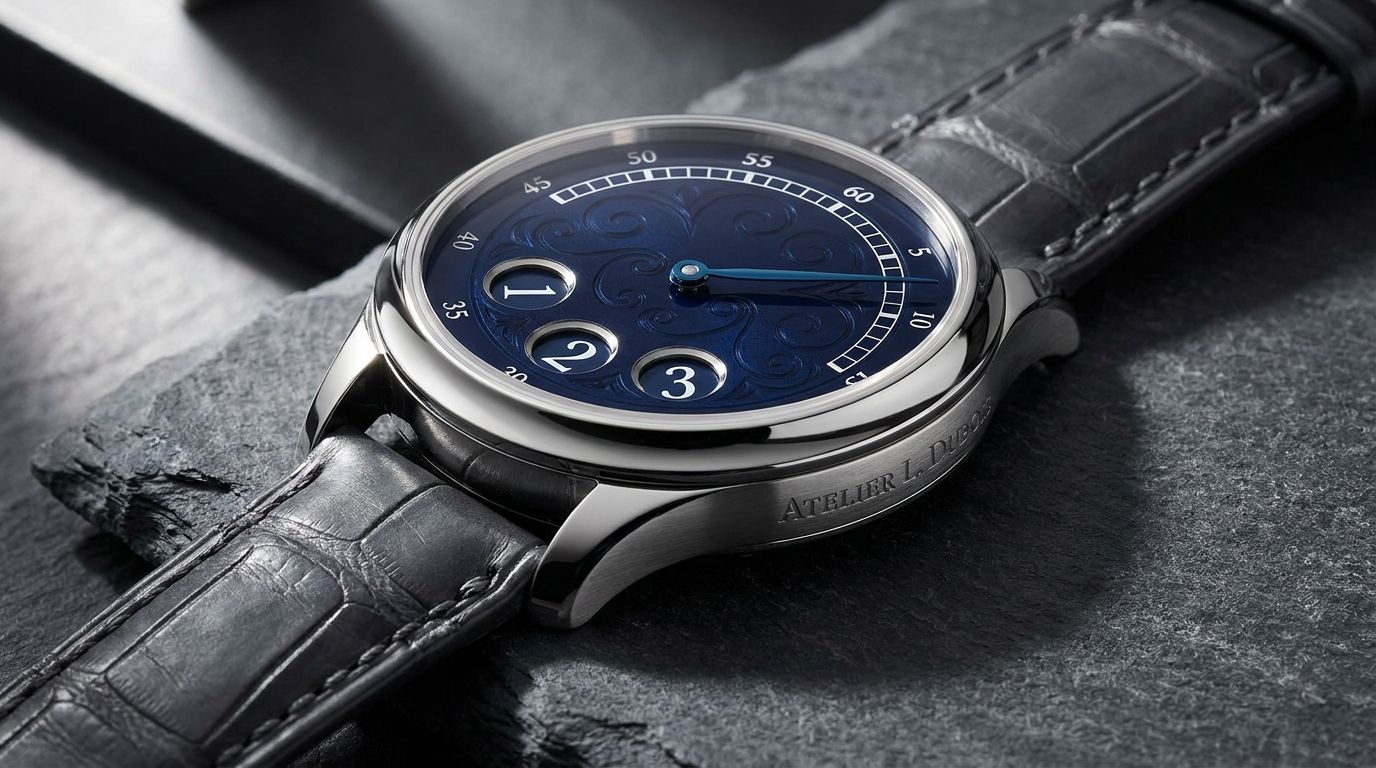
This watch tells time completely differently — and there's a 17th-century pope to thank for it

VALLÉE DE JOUX, SWITZERLAND — The most interesting watch you've never heard of tells time differently than anything else you've ever looked at. David Candaux just released the platinum version of his DC1 — and at roughly CHF 200,000 for a piece produced in single digits, it is the purest expression of what happens when a world-class movement developer decides to stop working for other people.


A complication invented for a sleeping pope


The wandering hours display has a history that almost nobody in the watch world bothers to teach. In the 1660s, Pietro Tommaso Campani — a Roman clockmaker working with his brothers — built a silent clock for Pope Alexander VII. The Pope was a notoriously light sleeper who couldn't tolerate the clicking of conventional clockwork. Campani's solution was a display where the hour numeral itself physically traveled across the dial, eliminating the need for a hand sweeping past a scale.


The concept migrated to pocket watches in the 18th century, appeared in pieces by Breguet and other high-grade makers, and then largely vanished for 150 years. A handful of modern manufacturers — most notably Audemars Piguet with certain Royal Oak Equation of Time pieces — have revived it. But nobody has made the wandering hours the central, defining feature of an entire watch brand the way David Candaux has with the DC1.


Who David Candaux is


Candaux spent over two decades as a movement developer inside the Swiss industry — specifically in the Vallée de Joux, the mountain valley that houses AP's Le Brassus manufacture and some of the most technically sophisticated watchmaking ateliers in the world. He worked on high complication projects that most watchmakers only read about.


When he established his own atelier, he made a specific choice: one watch, one complication, done with a level of obsession that a manufacture producing thousands of units annually cannot afford. The DC1 is the result. He makes approximately 10 to 15 pieces per year, by hand, in his own workshop.


How the DC1 works


On a conventional watch, a hand rotates around a fixed dial and points to the hour. On the DC1, there are no hour hands. Instead, three rotating discs — each displaying a numeral — travel along a curved arc on the dial surface. Each disc carries a single hour numeral and takes four hours to complete its journey from one side of the arc to the other, at which point the next disc seamlessly takes over.


The minute scale is fixed on the dial. You read the time by noting which numeral is currently traveling across the arc and where its leading edge falls against the fixed minute scale. It takes about 20 seconds to decode on your first try. After a week of wearing one, you never think about it again.


The mechanical challenge isn't the display itself — it's keeping it accurate. Three rotating discs each carrying a numeral, each transitioning on cue, each requiring synchronization with the going train, all while maintaining chronometric precision. The DC1 movement — designed and assembled entirely by Candaux — achieves this with a hand-finished lever escapement regulated to +/- 3 seconds per day.


The platinum DC1


Previous DC1 variants have used titanium and 18K rose gold. The platinum version is a different proposition entirely. Platinum is heavier, harder to machine, and significantly more expensive to work with — but it creates a surface quality that no other case metal matches. The color sits between white gold and silver, with a depth that changes under different light conditions.


The platinum DC1 case is 42mm with a dial in deep blue grand feu enamel, hand-applied by an independent enamel atelier in Geneva. The movement bridges are finished in German silver with black-polished bevels — a level of decoration that most watch buyers will never see because it's only visible through the sapphire caseback.


What this means for how you think about collecting


Every watch on the standard list — Submariner, Royal Oak, Overseas, Santos — tells time with a hand and a scale. That's been the default for 150 years and there's nothing wrong with it. But the DC1 is a reminder that the constraints we accept as universal are mostly just conventions, and that the most interesting watchmakers are the ones asking whether the conventions make sense.


You don't need to buy one. You need to know it exists.


Image: David Candaux

file_u4mZVOwe8oO7g
Profile picture
owenProfile picture@ohwhen·Jun 18

Zenith just put a Japanese independent watchmaker's name on their most historic movement

LE LOCLE, SWITZERLAND — Two names on one dial. That's the entire premise — and in watchmaking, it's enough to make serious collectors stop scrolling.


Zenith and Naoya Hida just announced a double-signed collaboration built around the manufacture's historic G.F.J. Calibre 135 — a pocket watch movement from the early 20th century, revived and retranslated for the wrist. It is, by a significant margin, one of the most philosophically interesting watches of the year.


Why "G.F.J." matters


Zenith was founded in 1865 in Le Locle by Georges Favre-Jacot — a 22-year-old who consolidated the fragmented cottage watchmaking industry of the Jura valley under one roof. He was, essentially, the first person to run a watch factory in the modern sense: design, production, and assembly in a single building.


The initials G.F.J. on this project are a deliberate nod to the brand's deepest roots — not the El Primero era, not the 1980s quartz crisis survival, but the original manufacture before any of that existed. The Calibre 135 is from that period. It's a high-grade pocket watch movement known for its exceptional regulation, fine finishing, and the kind of dial legibility that Favre-Jacot built his reputation on. Zenith adapting it for the wrist is an act of historical archaeology.


Who is Naoya Hida


If you've never heard of Naoya Hida, you're in good company. He operates a one-man atelier — NH&Co. — producing roughly 20 watches per year, starting around CHF 45,000. He trained in Switzerland, spent years at a major manufacture learning movement decoration and regulation, then returned to Japan to establish his own practice.


His watches are defined by restraint. Where most independent makers chase complication and visual drama, Hida pursues something harder: the perfect simple watch. Flawless surface finishing. Dial textures that reward five minutes of examination. Hour, minute, small seconds — nothing more. His clientele is small, global, and deeply loyal.


Hida is part of a generation of Japanese independent watchmakers — including Kari Voutilainen's protégés and others from the Habring² orbit — who are producing some of the most technically accomplished work in the world with almost no mainstream visibility. The Zenith collaboration brings that work to a broader audience for the first time.


The double-signed tradition


Double-signing a watch dial — two names, usually a maker and a notable retailer or collaborator — is a tradition as old as the Swiss industry itself. In the 18th and 19th centuries, prestigious retailers from London to New York would have their own names engraved on movements supplied by Swiss manufacturers. It signified trust: the retailer was vouching for the watch, the maker was vouching for the retailer.


In the modern era, double-signed pieces almost always command a premium at auction. A Patek Philippe with a historic retailer signature — Gondolo & Labouriau, Beyer, Tiffany & Co. — can trade at multiples of the unsigned equivalent. The Tiffany Blue Nautilus 5711 that sold for $6.5 million at Phillips was double-signed. The premium was substantial precisely because of those two words on the dial.


The Zenith x Hida collaboration inherits this tradition but inverts it: here, the manufacture is partnering with an artisan, not a retailer. It's a statement about creative parity — Zenith isn't lending Hida its name for distribution; Hida is lending Zenith his sensibility for interpretation.


What you're actually getting


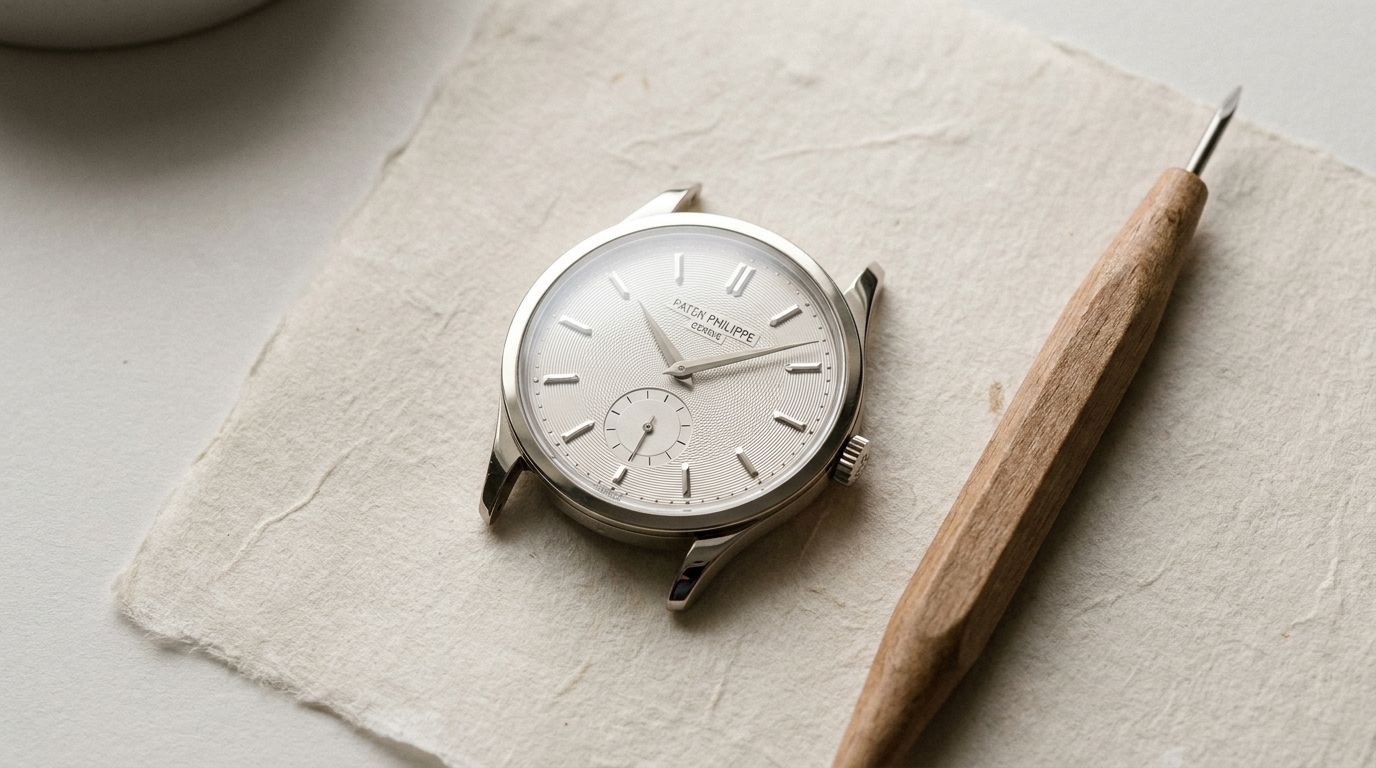
The G.F.J. Calibre 135 collaboration is a 38mm white gold dress watch. The movement has been decorated by Hida's atelier using traditional Japanese finishing techniques — a combination of hand-anglage and a surface treatment that doesn't exist in Swiss manufacture playbooks. The dial is lacquered in a matte warm grey with hand-applied indices. Production is undisclosed but expected to be under 20 pieces.


Pricing hasn't been formally published, but comparable Hida pieces suggest a starting point north of CHF 50,000.


Why this matters if you're buying your first watch


You're not buying this one. But understanding why it exists — why two entities with nothing commercially obvious in common would build something together — tells you everything about what actually drives value in watchmaking. It's not marketing budgets. It's not case size. It's authorship, restraint, and the willingness to make 20 of something instead of 20,000.


That instinct is worth developing early.


Image: Zenith / NH&Co.

file_YGhRERSN19wFi
Profile picture
owenProfile picture@ohwhen·Jun 18

Sotheby's Geneva just did CHF 14.98 million. Here's how to read the auction market like a collector.

GENEVA, SWITZERLAND — Sotheby's Geneva closed its Important Watches sale last month with a CHF 14.98 million total, landing solidly within pre-sale estimates and confirming what most serious collectors already suspected: the upper tier of the watch market remains structurally healthy even as the mid-market softens.


The number sounds abstract. Here's how to read it.


What CHF 14.98M actually means


Sotheby's Geneva runs two "Important Watches" sales per year — May and November — positioned as their curated top-tier events, distinct from online-only or regional catalogues. A CHF 14.98M result puts this sale in the solid-to-strong category for the format. It's not a record, but records aren't the point. What matters is sell-through rate — the percentage of lots that find buyers — and whether top estimates are being challenged or abandoned.


When Geneva results come in near high estimate, it signals that serious money is still actively bidding. When lots pass (go unsold), it means buyers found the seller's expectations disconnected from current reality. The Sotheby's May result showed a healthy sell-through, which is the more important data point than total hammer value.


The three houses and what they mean


If you're new to auctions, you need to know the landscape:


Phillips is the market leader for collectible watches. Their Geneva and New York sales consistently produce the highest hammer values and the most competitive bidding on vintage Rolex, Patek Philippe, and independent makers like F.P. Journe and George Daniels. Phillips built this position by focusing almost exclusively on watches — they don't have the art and jewelry distractions of the larger houses.


Christie's and Sotheby's are the old guard. Both have been running watch sales for decades, and both maintain strong positions on estate pieces, historical references, and any lot with serious provenance. Christie's made the FP Journe "Parking Metre" sale (CHF 1.54M) happen earlier this year. Sotheby's is where Eric Clapton's Patek 5004G went.


The three houses are not interchangeable. Where a watch sells matters almost as much as what it sells for.


What the secondary market is telling you right now


The broader picture from Geneva and the auction season so far:


  • Tier 1 references hold. Rolex Daytona references like the 116500LN in white dial, AP Royal Oak 15202 in steel, and Patek Nautilus 5711 — the pieces with genuine waiting lists and institutional demand — continue to trade at or above retail. This isn't changing.

  • Tier 2 is repricing. Watches that spiked during 2021-2022 speculation and never justified those prices on fundamentals have corrected. If you bought a steel sports watch from a second-tier brand at peak hype pricing, you've likely taken a loss on paper.

  • Provenance commands premium. The single biggest driver of auction outperformance is story. A watch owned by someone notable, with original papers and box, in undisplaced condition, will beat estimates regardless of market conditions. Collectors are paying for certainty and rarity.


How to use auction data as a collector


You don't need to be bidding at Sotheby's to benefit from these sales. Auction results are published — usually within 24 hours of the sale closing — and they're the most accurate pricing signal available for watches that don't trade at retail.


Here's how to actually use them:


  • Cross-reference realized prices against current dealer and grey market listings for the same reference. If the auction price is 20% below grey market, the grey market is overpriced.

  • Watch sell-through rates by category. If vintage Omega Speedmasters are consistently passing (unsold) at Sotheby's, that's a directional signal about where that segment is heading.

  • Track the top 5 lots from every major sale. Over time, you'll develop instincts about which references keep performing and which only move when conditions are perfect.


The auction market isn't a game for most people with first-watch budgets. But understanding it makes you a smarter buyer everywhere else — because every price you ever negotiate on the secondary market is anchored to what someone paid at auction.


Image: Sotheby's

file_3Oh2pIiacPJ3g
Profile picture
owenProfile picture@ohwhen·Jun 17

Parmigiani's 30th anniversary watch costs $540,000 and chimes like a church bell

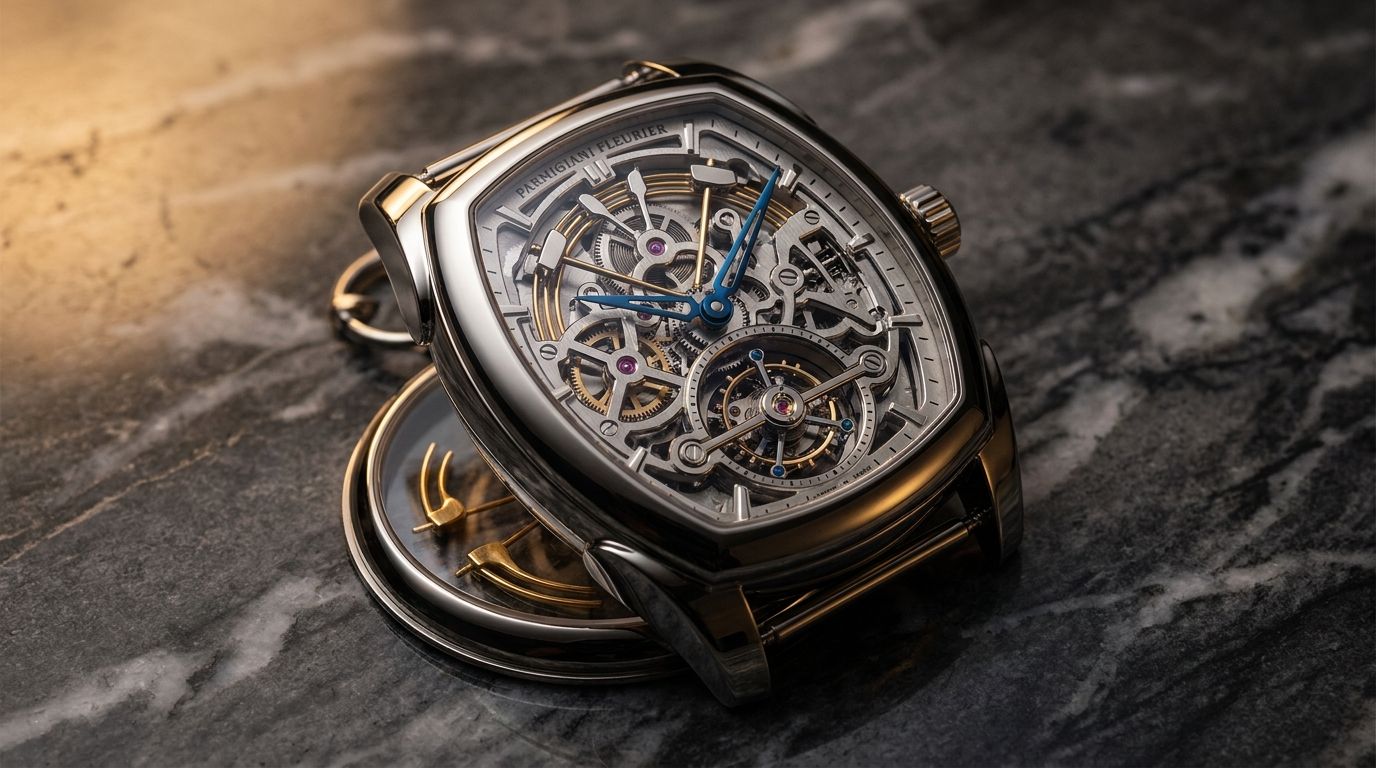
FLEURIER, SWITZERLAND — Parmigiani Fleurier is celebrating 30 years with the most complicated watch it has ever made. The Parmigiani Carillon Tourbillon 30th Anniversary is limited to 5 pieces, priced at CHF 490,000, and does something almost no watch on earth can do: it chimes the time using three separate gongs and hammers — a true mechanical carillon — while simultaneously housing a flying tourbillon regulated to fractions of a second.


This isn't a watch you buy. It's a watch you commission, wait years for, and then never actually wear anywhere useful.


How Michel Parmigiani got here


The brand's founding story is more interesting than most people know. Michel Parmigiani didn't start by making watches. He started by restoring them.


In the 1970s, the Sandoz Family Foundation — the philanthropic arm of the Swiss pharmaceutical dynasty that would eventually help form Novartis — hired a young watchmaker to restore their collection of antique timepieces. That collection included original mechanisms by Abraham-Louis Breguet, widely considered the greatest watchmaker who ever lived.


Parmigiani spent years taking apart and rebuilding movements that hadn't functioned in over a century. He learned how the masters thought. When the Sandoz Foundation funded him to launch his own brand in 1996, he came to it with a depth of historical knowledge that almost no other modern watchmaker could claim.


Thirty years later, the Carillon Tourbillon is the direct expression of everything he absorbed from those restorations.


What a carillon actually is


Most people know what a minute repeater does: press a pusher, the watch chimes the hour and minutes. A carillon takes this further. Instead of two gongs producing two distinct tones, a carillon uses three gongs and three hammers to create a three-note chord sequence — the same harmonic relationship you hear in a church bell tower.


The acoustic result is dramatically different. A standard repeater sounds like a mechanical alarm. A carillon sounds like music.


Combining that with a flying tourbillon — a tourbillon with no upper bridge, appearing to float in midair — required Parmigiani's engineers to solve clearance problems that don't exist in simpler watches. The hammers and gongs occupy exactly the space where you'd normally route the tourbillon's support structure. The solution involved custom-designed bridges and a movement architecture built specifically for this configuration.


The numbers


  • Case: Platinum, 44mm

  • Complications: Three-gong carillon minute repeater, flying tourbillon at 6 o'clock

  • Power reserve: 55 hours via twin barrels

  • Dial: Grand feu champlevé enamel with hand-applied Roman numerals

  • Production: 5 pieces total

  • Price: CHF 490,000 (~$540,000)


The movement alone took Parmigiani's Atelier Technique over three years to develop and contains more than 700 components.


Why you should care about Parmigiani


You're probably not in the CHF 490K market. But understanding Parmigiani tells you something important about the watch world's hidden tier.


Most collectors orbiting Rolex, AP, and Patek know those brands well. Far fewer know that sitting above them — in both price and technical complexity — is a small group of manufactures that operate almost entirely outside mass-market awareness. Parmigiani is in that group, alongside A. Lange & Söhne, F.P. Journe, and a handful of others.


What makes Parmigiani unusual even within that group: they make everything in-house. Not just movements — cases, dials, straps. Through affiliated ateliers in the Vallée de Joux, Parmigiani controls the full manufacturing chain in a way that even brands like Patek Philippe don't. When you buy a Parmigiani, there is no ETA, no Sellita, no outsourced bracelet link. Every component has Fleurier in its DNA.


The 30th Anniversary Carillon Tourbillon isn't a product announcement. It's a declaration that three decades of uncompromised watchmaking produces something nobody else can replicate.


Image: Parmigiani Fleurier

file_9Ankqg2AgMppV
Profile picture
owenProfile picture@ohwhen·Jun 17

Blancpain made 7 watches to mark Marilyn Monroe's 100th birthday. Here's why they matter.

LE BRASSUS, SWITZERLAND — Seven people in the world will own what Blancpain just made. The Ladybird Marilyn Monroe Centennial Tribute marks the 100th birthday of the actress born June 1, 1926 — and connects two icons that debuted in the same era, for the same reason: both were engineered to stop traffic.


Seven pieces. $54,300 each. If you want one, you already missed it.


The watch that started everything


Blancpain is the oldest Swiss watch brand still in operation, founded in 1735 in the village of Villeret. But the piece that cemented its legacy in popular culture wasn't a dive watch or a tourbillon. It was the Ladybird, introduced in 1953 — at the time, the world's smallest automatic wristwatch.


The original Ladybird measured just 21mm across, with a hand-wound movement so miniaturized that Blancpain's watchmakers had to develop entirely new tools to assemble it. The name came from its small, round shape — a jewel that looked like it belonged on a woman's wrist the way a ladybug belongs on a leaf. For the next decade, it was the watch for women in Europe who took mechanical watchmaking seriously.


Nineteen fifty-three was also, not coincidentally, one of Monroe's career-defining years. Gentlemen Prefer Blondes and How to Marry a Millionaire both released that year. The Ladybird and Monroe entered the cultural consciousness at almost exactly the same moment.


The centennial tribute


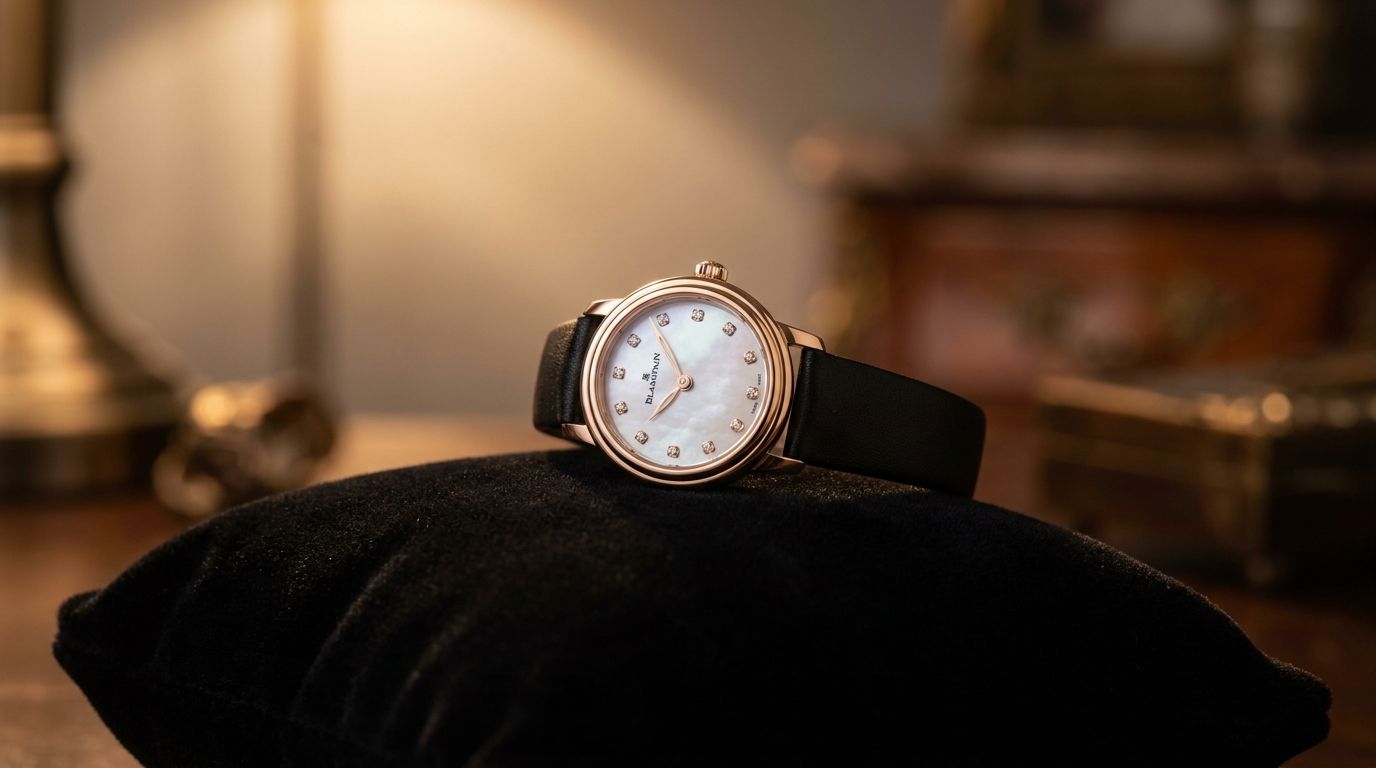
The 2026 Ladybird Marilyn Monroe Centennial Tribute uses an 18K pink gold case at 21.5mm — slightly larger than the original but engineered with the same philosophy. The dial is white grand feu enamel set with 57 brilliant-cut diamonds around the bezel, catching light the way the original was designed to: quietly, then all at once.


The caseback is engraved with Monroe's signature and the years 1926-2026, hand-applied by Blancpain's guillocheurs at the Le Brassus manufacture. The movement is the Calibre 15A — a micro-rotor automatic wound by a 22K gold oscillating weight no larger than a thumbnail.


At $54,300, this isn't a watch for everyone. At 7 pieces, it wasn't meant to be.


Why this matters to you


You're probably not buying a $54,000 Ladybird. That's not the point. What Blancpain just demonstrated is something worth understanding if you're serious about this world: the best watchmakers don't chase trends — they commemorate meaning.


The Ladybird exists because in 1953, someone at Blancpain decided to solve a problem nobody had solved before: make a truly automatic watch small enough to be genuinely beautiful on a woman's wrist. That obsession with precision at impossible scale is the same impulse that drives every watch on your radar, from the Submariner to the Royal Oak.


The Marilyn tribute works because Monroe herself understood craft. She was famously meticulous about her appearance, her timing, her delivery. The watch industry rewards exactly that kind of precision with pieces like this — objects where every micron is deliberate.


The broader pattern


Blancpain does this consistently. The brand was one of the first to revive the mechanical watch in the 1980s when quartz had nearly killed the industry. They launched the Fifty Fathoms in 1953 — the same year as the Ladybird — and it's now one of the most respected dive watches ever made. Blancpain occupies a singular position: serious horology with no entry-level product to dilute it.


If you're building a knowledge base as a collector, Blancpain belongs on your list. Their work doesn't get the Instagram volume of Rolex or AP, but it commands respect in rooms where those brands are taken for granted.


Image: Blancpain

file_krPfzBnJY441a